
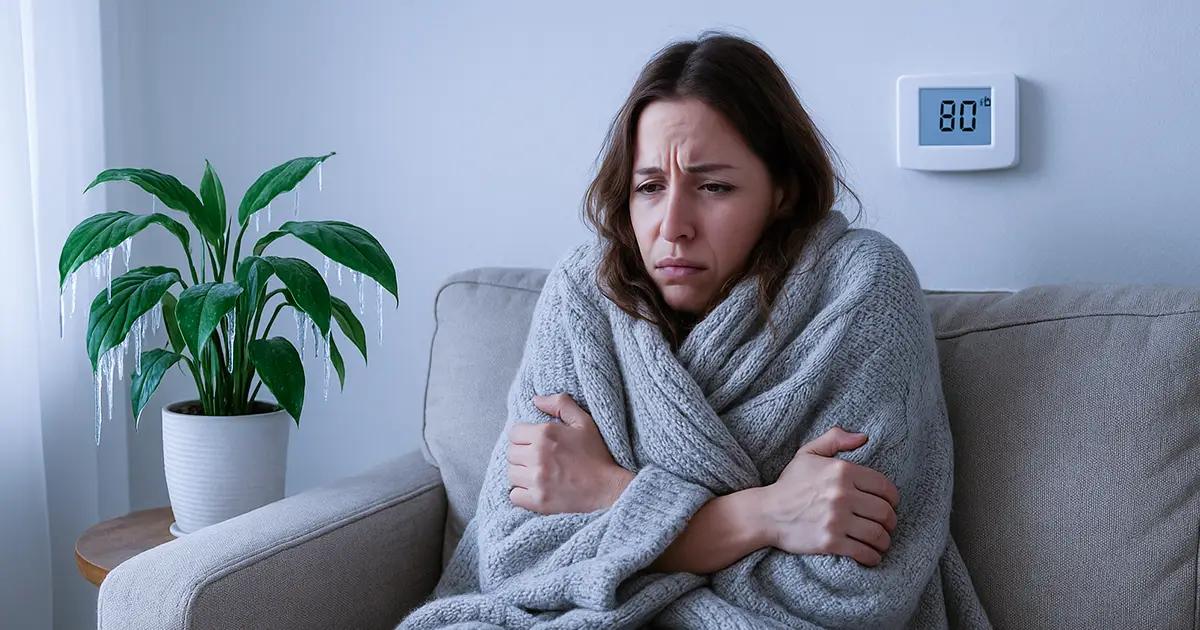
Does your home still feel too hot in summer or too chilly in winter, even though you've got a thermostat? You're definitely not alone. Here in Tulsa and across Oklahoma, we see this all the time. And honestly, it's usually not the HVAC system that's the problem. It's how the thermostat is being used.
At GNH Heating & Cooling, we've been helping families get their home comfort "just right" for years. And you know what we've learned? A lot of discomfort and surprisingly high energy bills come down to simple thermostat mistakes that are easy to fix once you know what to look for.
So let's talk through the most common ones. Make a few small changes, and you'll likely notice a real difference in your comfort and what you're paying each month.
1. Cranking the Thermostat Won't Heat or Cool Your Home Faster
We get it. You come home to a cold house, and your first instinct is to crank the heat up to 80°F. Seems logical, right? Warm it up faster?
Here's the thing: your HVAC system doesn't work that way. It runs at the same speed no matter what temperature you set. Turning it way up doesn't make it heat faster, it just makes it run longer, overshooting your actual comfort zone and wasting energy in the process.
Better approach? Set it to where you actually want it (usually somewhere between 68°F and 72°F in winter) and give it time. Your system will get there, and you won't end up with a stuffy, overheated house.
2. Not Using Setback Temperatures When You're Away
Leaving your thermostat at the same setting all day long is probably the most expensive mistake on this list.
Think about it: why heat or cool an empty house? Setting a "setback temperature" means adjusting things a few degrees when you're at work or asleep, then bringing it back to normal when you're home and active.
Try this:
- Winter: Drop it to 60–62°F while you're sleeping or away
- Summer: Bump it up to 78–80°F when nobody's home
Worried about walking into a cold house? A smart thermostat can start warming things up before you even pull into the driveway. It's one of those set-it-and-forget-it wins.
3. Setting the Fan to "On" Instead of "Auto"
This one's especially important in humid climates like ours.
When you set the fan to "On," it runs constantly, even when your air conditioner isn't actually cooling. That might not sound like a big deal, but here's what happens: moisture that your AC collected on the cooling coil? It gets blown right back into your house, making everything feel sticky and uncomfortable.
Switch it to "Auto" instead. The fan will only run when the system is actively heating or cooling. That means better de-humidification and a more comfortable home overall.
4. Misusing the "Emergency Heat" Setting on Heat Pumps
If you've got a heat pump, listen up.
That "Emergency Heat" setting isn't for when you're feeling cold or want the house to warm up faster. It's only supposed to be used when your heat pump is legitimately broken.
Using emergency heat when you don't need to can send your energy bill through the roof. It bypasses your efficient heat pump and switches to expensive electric resistance heating instead.
Even when it's in the low teens here in Tulsa, modern heat pumps can handle it just fine. So unless your system is actually down, keep it on regular "Heat."
5. Leaving Your Heating or Cooling On Constantly
Some people think keeping the thermostat at a steady, mild temperature all day will save money. Unfortunately, that "constant comfort" strategy usually backfires.
Your HVAC system ends up running all the time which uses energy even when it doesn't really need to. Over the course of a month, that adds up fast.
The smarter play? Let your thermostat adjust with your schedule. Lower the temperature when you're sleeping or out, raise it when you're home. Your system will run more efficiently, and you won't sacrifice any actual comfort.
6. Forgetting to Adjust the Thermostat When You're Away
Heading out for a few hours? Going on vacation? Don't leave your thermostat where it is.
In summer, raise the temperature to give your AC a break. In winter, lower it, but don't turn it off completely. Keeping things around 55°F or higher helps prevent frozen pipes and condensation problems.
If remembering to adjust it sounds like a hassle, that's where smart thermostats really shine. Some can even detect when you've left and adjust automatically.
7. Setting the Thermostat Too High or Too Low
It's tempting to go extreme and set the AC to 65°F in summer or crank the heat to 75°F in winter. However, all that does is waste energy and create uncomfortable temperature swings.
Aim for these ranges instead:
- Summer: 74°F to 78°F
- Winter: 68°F to 72°F
Find a comfortable setting and stick with it. Use ceiling fans, throw on a sweater, or adjust your window shades to fine-tune comfort without constantly messing with the thermostat.
8. Placing the Thermostat in the Wrong Spot
Where your thermostat lives matters more than you'd think.
If it's near a lamp, kitchen appliance, or a window that gets direct sunlight, it's going to read the temperature wrong. It'll think your whole house is warmer than it actually is, so your system shuts off too early, leaving other rooms cold or under-conditioned.
Better placement:
- Interior wall, away from windows
- Not near vents or electronics
- In a central room you use regularly
If you're not sure whether yours is in a good spot, just ask next time we're out for a service call. It's an easy fix that can make a real difference.
9. Ignoring Thermostat Maintenance
A dusty or glitchy thermostat can throw everything off: bad readings, poor performance, and wasted energy.
Every few months, take a minute to:
- Wipe it down
- Replace the batteries if it's battery-powered
- Check its accuracy with a separate thermometer
If something seems "off" or the temperature never feels quite right, give us a call. Sometimes all it needs is a quick recalibration.

10. Not Upgrading to a Smart or Programmable Thermostat
Still using a dial or basic digital thermostat? You're missing out.
Smart thermostats learn your routine and adjust automatically based on when you're home, away, or asleep. Some even use your phone's location to start heating or cooling as you head home.
Programmable thermostats let you create a schedule that fits your day-to-day life. Either way, you're looking at lower energy bills and better comfort without having to think about it.
Plus, these devices are more affordable than ever!
A Few More Ways to Help Your Thermostat Out
Want to get even more out of your system? Try these:
- Seal air leaks around windows and doors. Drafts make it harder to keep a steady temperature inside.
- Keep your filters clean. A clogged filter makes your HVAC work harder and can cause uneven heating or cooling.
- Use your curtains strategically. Block the sun in summer, let it in during winter.
- Layer up indoors. Adding a hoodie or blanket in winter means you can lower the thermostat a few degrees without feeling it.
Final Thoughts
Your thermostat might be small, but it has a huge impact on how comfortable your home feels and what you're spending on energy. Avoiding these mistakes is one of the easiest ways to save money and keep your family comfortable all year long.
Whether you need help installing a smart thermostat, getting your current setup dialed in, or just want a second opinion, GNH Heating & Cooling is here for you. We've been serving homeowners throughout Tulsa and the surrounding areas with honest advice, expert service, and solutions that actually fit your budget.
Contact us today at (918) 804-1549 to schedule an appointment or set up a consultation. Let's get your home running the way it should.